Design · Supply · Installation · Maintenance
Automatic fire suppression systems
From early detection to automatic suppression with water, foam or gas – systems designed for your space, integrated with one another and maintained to international standards.
Which system suits your space?
Every building needs its own solution – choose the type of space to see the baseline recommendation. The final choice is set by an engineering study.
Detection + sprinklers; chemical clean agent (FM-200, Novec 1230) in technical rooms
CO₂ would endanger people – it is not used in occupied spaces.
How an integrated system works
- DetectionSmoke, heat or flame
- AlarmWarning and notification
- ControlPanel, delay, activation
- SuppressionWater, foam or gas
- ZoningCurtains and smoke control
- MaintenancePeriodic inspection
Fire detection and alarm
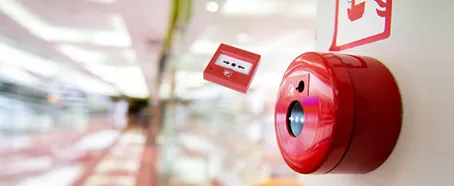
They detect smoke, heat or flame at the very first stage, warn people and trigger the other systems: suppression, curtains, ventilation and notification of the emergency services.
Types of system
- Commercial – for offices and shopping centres, with wide coverage and integration with other measures
- Industrial – for high-risk factories and warehouses
- Smart (IoT) – real-time alerts and 24/7 remote monitoring
- Manual and automatic – manual call points and independent detection
- Residential – compact and easy to install
How a fire is detected
- Smoke – sensors that pick up combustion particles in the air
- Heat – monitoring of the temperature and how fast it rises
- Flame – sensors that pick up infrared or ultraviolet radiation
- Integration – the alarm is raised and the emergency services are notified
Special solutions
- EX-proof detectors and panels for explosion-hazard zones
- Wireless (Wi-Fi) systems where cables are not allowed or would damage the building
- 24/7 monitoring and maintenance service from a single source
Water-based suppression systems
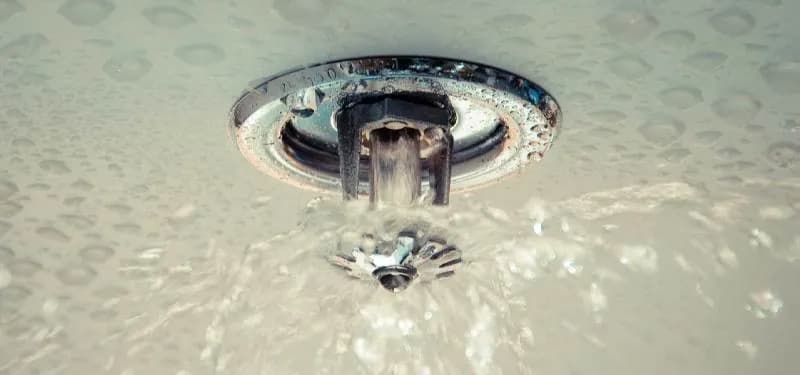
Sprinkler systems are the most widely used and most effective suppression systems wherever the building allows it. They are designed with hydraulic calculations to NFPA 13 and EN 12845 and maintained to NFPA 25.
Types of sprinkler system
| Type | How it works | Where it is used |
|---|---|---|
| Wet pipe | The pipework is always full of water; a sprinkler opens with heat and sprays immediately. | Heated spaces – offices, hotels, shopping centres |
| Dry pipe | The pipework holds pressurised air; when a sprinkler opens the pressure drops, the valve opens and water fills the network. | Spaces at risk of freezing – unheated stores, car parks |
| Deluge | Open sprinklers; the valve is opened by the detection system and water discharges from all of them at once. | High risk and fast fire spread |
| Pre-action | The valve opens only after a detection signal – protecting against accidental discharge. | Archives, data centres, high-value buildings |
Fire pump set
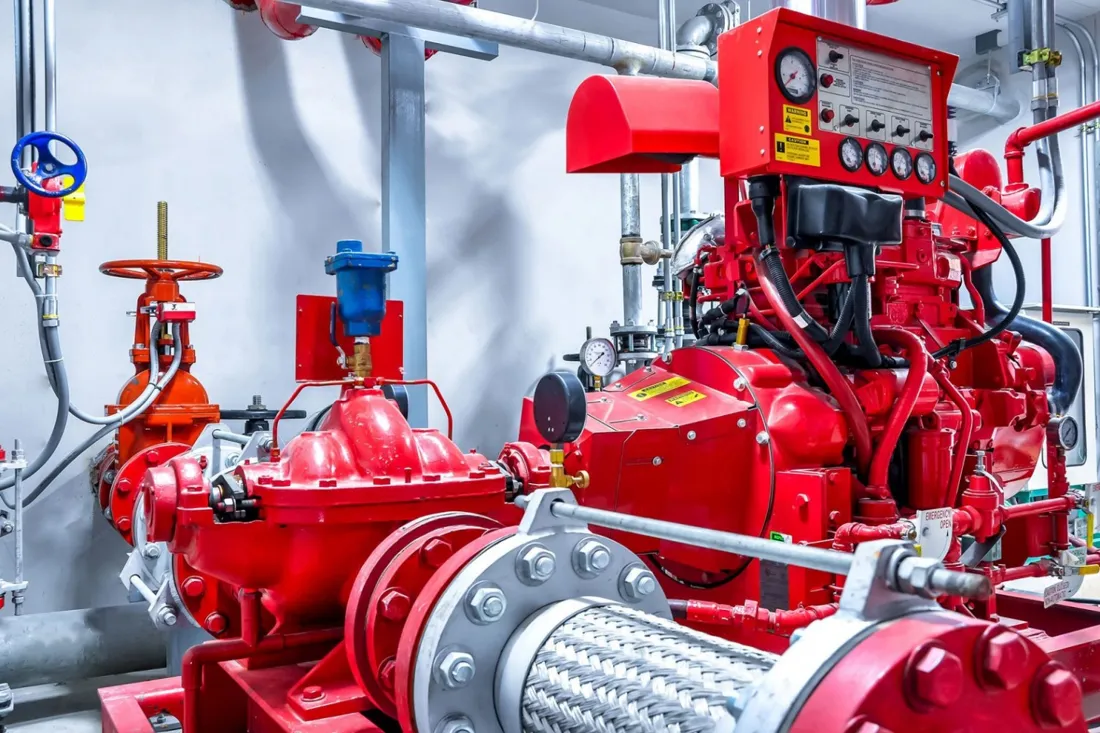
- Electric pump, diesel pump and a jockey pump to hold the pressure, to NFPA 20
- Independent control panel for each pump
- Tested up to 150 % of rated flow
- Fire water tank and a fire brigade inlet
Water mist
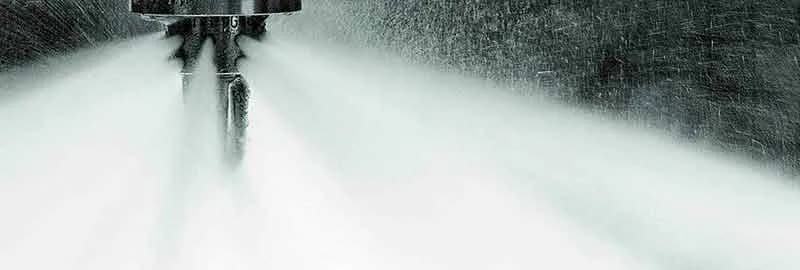
- Very fine droplets that cool and smother the fire with low water use
- Less water damage than a conventional sprinkler
- For high-value spaces, machinery and plant rooms
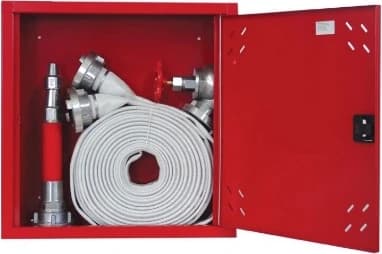
Hydrants and hydrant cabinets
- Above-ground and underground hydrants, and cabinets fitted with hoses and branch pipes
- First response before the fire brigade arrives
- See our hydrant and hose catalogue
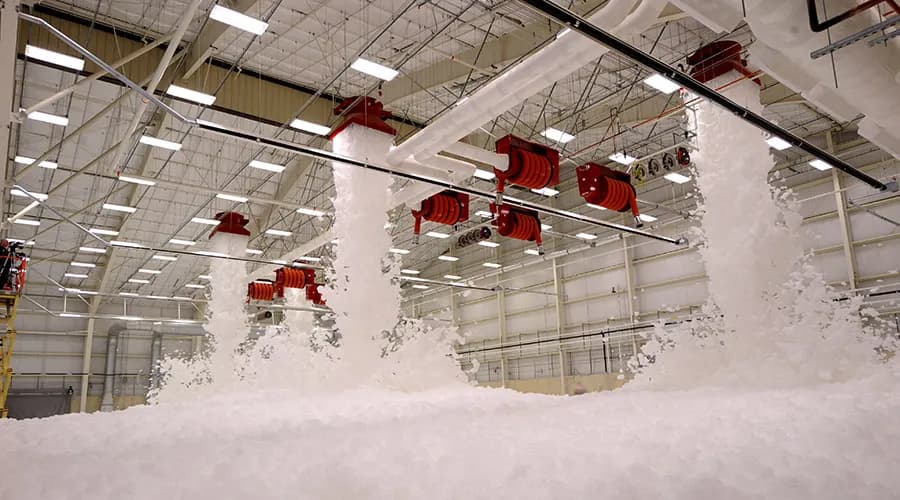
Foam suppression systems
For flammable-liquid fires – hydrocarbons and polar solvents. Foam cuts the oxygen off from the vapours, separates the flame from the surface, stops evaporation and cools the surrounding metal; it even clings to vertical surfaces.
Types of foam concentrate
| Group | Concentrate | Note |
|---|---|---|
| Protein-based | P – protein | Hydrocarbon fires |
| Protein-based | FP – fluoroprotein | Higher burn-back resistance |
| Protein-based | FFFP – film-forming | Mixed at 3–6 % in water |
| Protein-based | AR-FFFP – alcohol-resistant | For polar solvents: alcohols, ketones, ethers, esters |
| Synthetic | AFFF – film-forming | Spreads quickly over fuel |
| Synthetic | AR-AFFF – alcohol-resistant | Hydrocarbons and polar solvents |
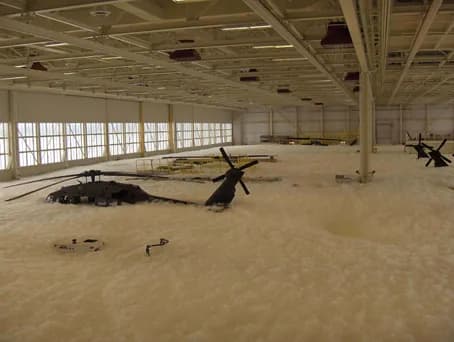
Foam sprinkler and deluge
- Automatic systems with foam sprinklers or deluge (flood)
- Aircraft and helicopter hangars – the most common use
- Designed with hydraulic calculations and an accurate proportioning rate
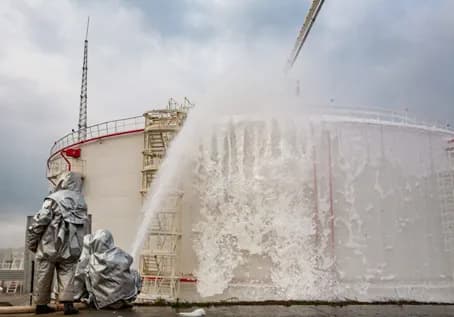
Foam monitors
- Hand-operated (manual or auto-oscillating) and fixed monitors
- Throw of 30 to 120 m depending on the model
- Refineries, fuel depots, ports and high-risk warehouses
High-expansion generators
- Quickly fill large volumes with foam
- Automatic or manual control, with a manual release station
- Hangars, warehouses, basements and cable tunnels
Foam fire cabinets
- Cabinets with a foam tank and inductor, wall-mounted or free-standing
- For areas where water must not be used
- First response to liquid fires
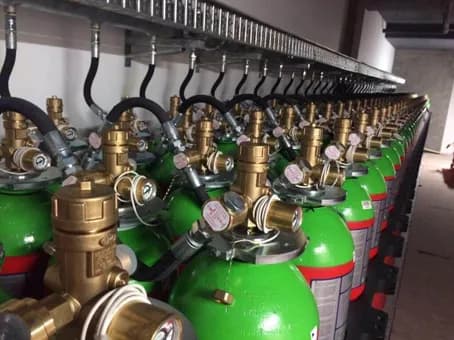
Gas systems – clean agents and CO₂
For spaces where water would do more damage than the fire itself: server rooms, archives, museums, telephone exchanges and electrical panels. Gas does not conduct electricity and leaves no residue – after ventilation the room and equipment carry on working.
Gaseous extinguishing agents
| Agent | Type | How it puts the fire out | Where it is used |
|---|---|---|---|
| FM-200 (HFC-227ea, heptafluoropropane) | Chemical agent | Absorbs heat and interrupts combustion; allows safe evacuation of the area | Server rooms, archives, telephone exchanges |
| Novec 1230 (FK-5-1-12) | Chemical agent | Absorbs heat without lowering oxygen; stored as a liquid in 25, 42 or 50 bar cylinders; stays only ~5 days in the atmosphere, with no effect on ozone | Data centres, museums, occupied buildings |
| Inert gases (argon, argonite, nitrogen, Inergen) | Inert gas | Lower the oxygen below the combustion limit; designed to EN 15004 (class B, surface class A, higher-hazard class A) | Archives, technical rooms, large spaces |
| CO₂ (carbon dioxide) | Inert gas | A heavy blanket of gas that lowers the oxygen; high or low pressure; total flooding or local application; classes A, B, C | Transformers, turbines, electrical rooms, paint booths, rolling mills, ships – unoccupied spaces |
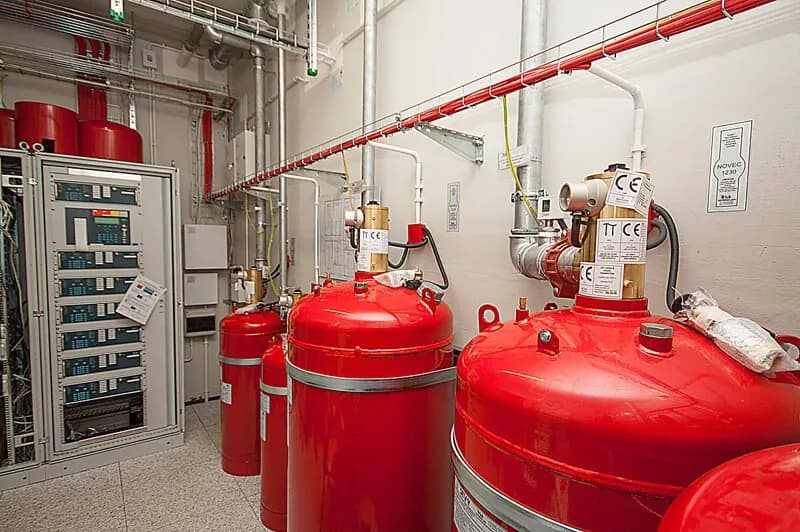
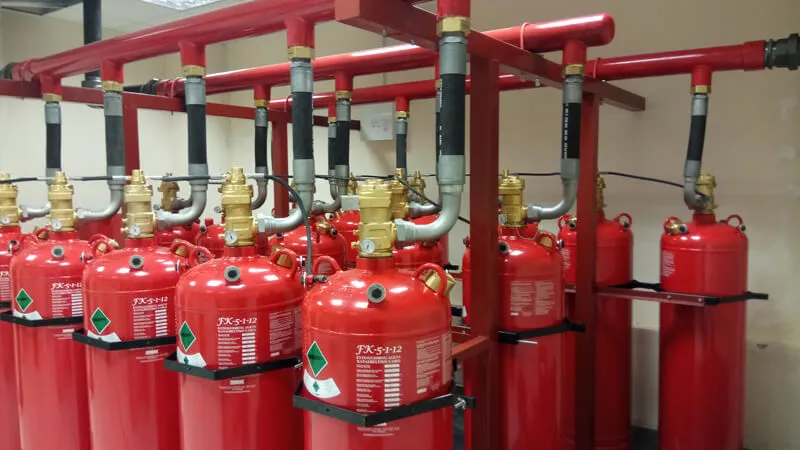
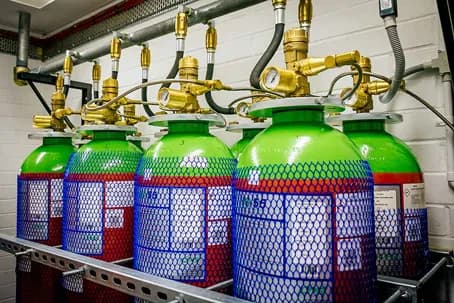
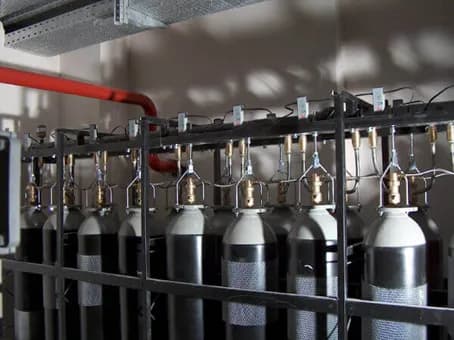
How it works
- Cross-zoned detectors and a control panel for each zone
- First detector: intermittent sounder · second: continuous sounder
- After a pre-discharge delay (e.g. 30 seconds) for evacuation, the gas is released
- Once the fire is out, the gas is cleared by ventilation with no residue
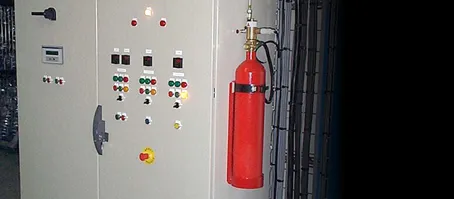
Suppression inside the electrical panel
- A polymer detection tube runs along the cables inside the panel
- 1, 2, 4 or 6 litre cylinders, next to the panel
- Puts the fire out at its source before it spreads into the room
Caution with CO₂
- CO₂ is dangerous to people at extinguishing concentration
- Used only in spaces with no permanent occupancy, with evacuation safety measures
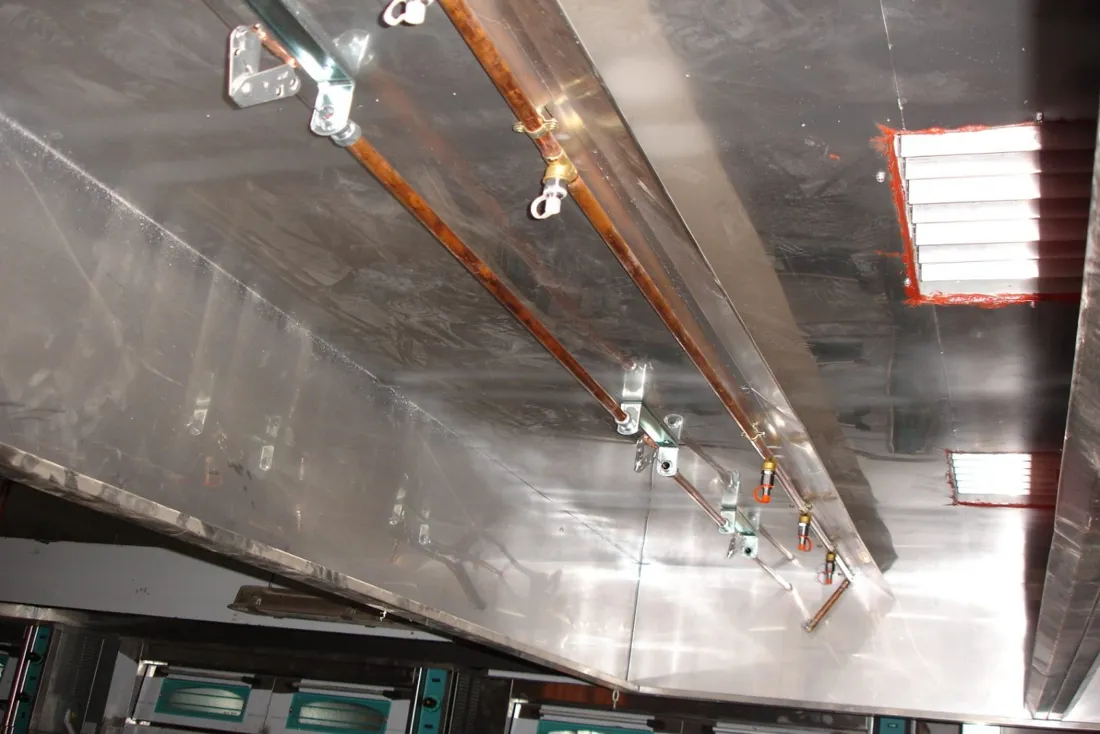
Kitchen hood systems
Automatic systems built into hoods and ducts for grease fires in ovens and fryers. Systems certified to UL 300 meet the international requirements.
Where they are used
- Restaurants and hotel kitchens
- Catering and industrial kitchens
- Bakeries and patisseries
Requirements
- Systems certified to UL 300
- Automatic shut-off of gas and power
- Mandatory periodic maintenance and inspection
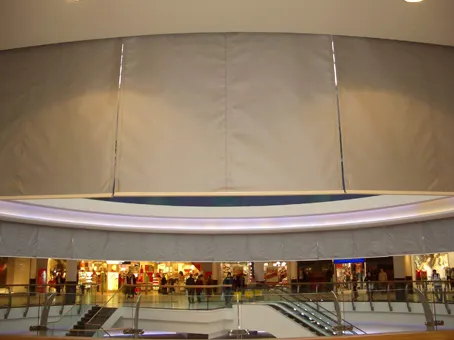
Fire and smoke curtains
They create fire and smoke zones without spoiling the architecture: rolled up during normal use, they drop on a detection signal or a manual button to protect the escape routes.
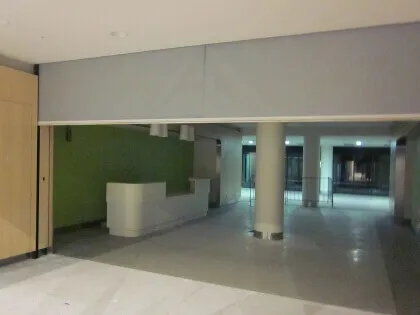
Features
- Tested to BS and UL standards for up to 240 minutes
- Fabric of steel and glass fibre, 450–700 g/m²
- Vertical, horizontal or curved travel to suit the architecture
- Integration with the existing alarm system and manual buttons
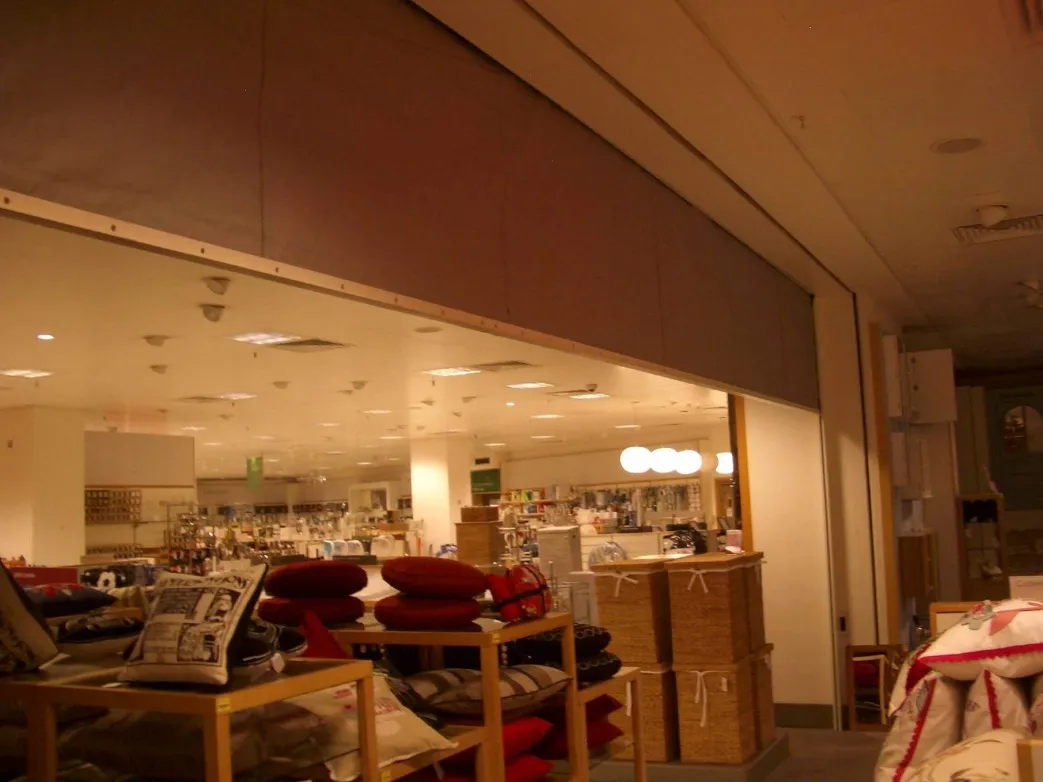
Where they are used
- Shopping centres and airports
- Hospitals and hotels
- Industrial plants and warehouses
- Office buildings and tunnels
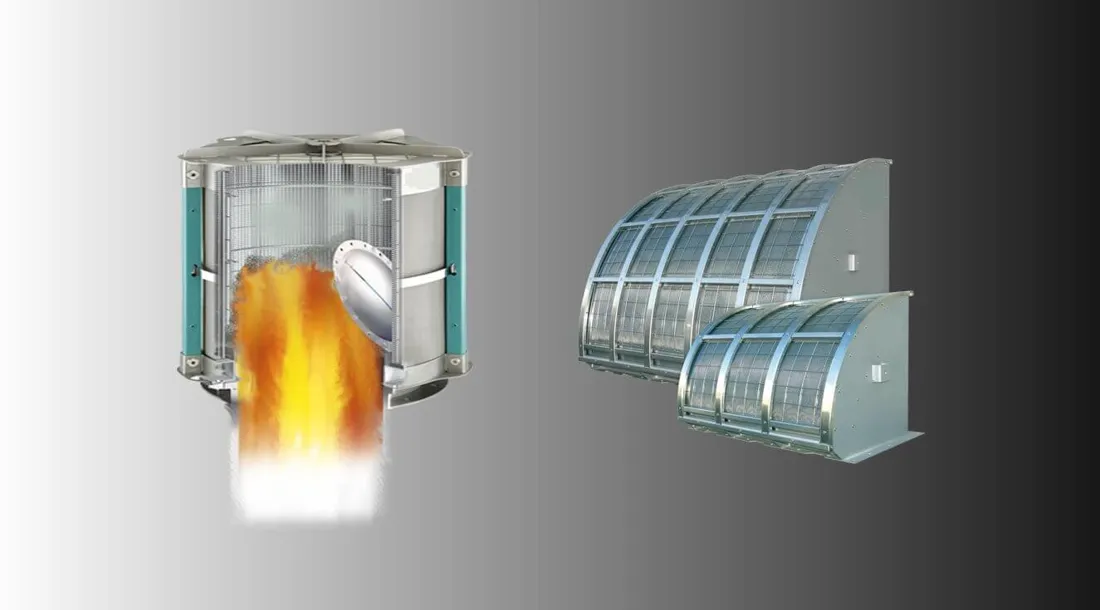
Explosion protection
In the food, wood and paper, chemical and pharmaceutical industries, dust explosions are the biggest risk alongside fire. Systems are engineered, installed and commissioned together with the manufacturer.
Explosion protection systems
| System | How it protects |
|---|---|
| Explosion suppression | Sensors detect the explosion at its start and the agent suppresses it chemically |
| Explosion vent panels | Release the expanding gases inside the vessel in a planned way |
| Flameless venting | For occupied areas – release the pressure without releasing flame |
| Explosion isolation | Pneumatic and mechanical devices that stop it travelling to other parts of the process |
| Spark detection and extinguishing | Detect and extinguish sparks and hot particles in ducts |
Sectors
- Food
- Wood and paper
- Steel
- Oil and gas
- Chemicals and petrochemicals
- Energy
Fire protection consulting
From risk assessment to commissioning and maintenance – we manage and supervise every phase of the project.
- Detailed fire risk assessment and reporting
- Preparation of evacuation plans
- System design to the applicable codes and regulations
- Coordinating approvals with the authorities and the fire service
- Planning and auditing of evacuation drills
- Staff training
- Routine inspections and periodic upgrades of the systems
Authorised designers
Projects and fire safety reports are prepared by the TEKNIKU SAFETY design office, in line with Law No. 08/L-261 on fire protection and Administrative Instruction (MPB) No. 12/2017.
Let us design your system
Send us the project or a description of the building – we will prepare the solution and a quote.